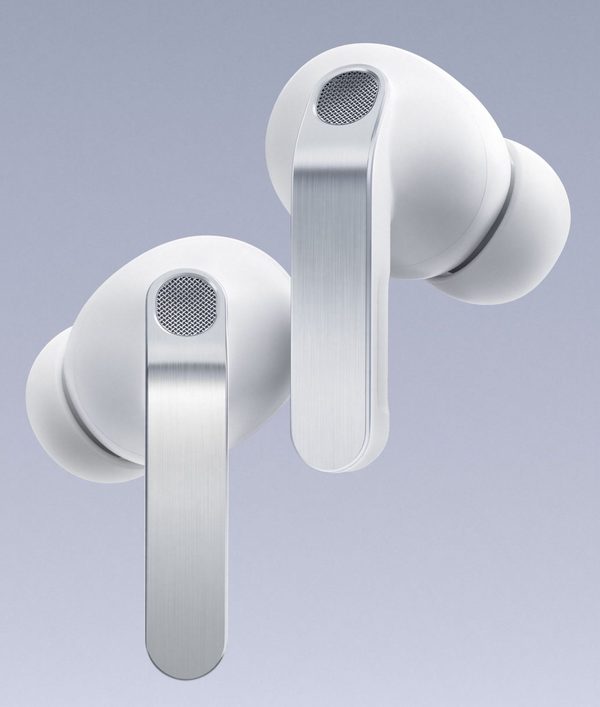
Samsung Galaxy Buds Hearing Aid: What the FDA Clearance Actually Means
Samsung's earbuds just got FDA clearance to work as hearing aids. Here's what's confirmed, what's still unknown, and what to do while it rolls out.
What Samsung Actually Announced
On August 11, 2026, Samsung announced that its Galaxy Buds Hearing Aid feature received clearance from the U.S. Food and Drug Administration. That clearance lets compatible Galaxy Buds function as an over-the-counter (OTC) hearing aid for adults 18 and older with perceived mild-to-moderate hearing loss — no prescription, no clinic visit.
This is a genuine milestone: Samsung is the second major consumer-electronics company, after Apple, to turn mainstream wireless earbuds into an FDA-cleared hearing aid. For the roughly 30 million U.S. adults with hearing loss who have never bought a hearing aid, another familiar, low-friction option is real news.
How the Galaxy Buds Hearing Aid Feature Works
Samsung's approach is built into the earbuds' own settings menu — there's no separate app to download. It comes in two connected parts.
1. The Hearing Test
First you take a self-administered Hearing Test that runs in about five minutes. It's a pure-tone test — the kind that plays quiet tones at different pitches and asks whether you can hear them — and Samsung has registered it as Software as a Medical Device (SaMD). Samsung describes the results as comparable to a professional audiologist's evaluation, and the test sorts your hearing into categories: normal, mild, moderate, severe, or profound.
2. The Hearing Aid
The Hearing Aid feature then personalizes amplification based on your test results, using NAL-NL2 — a widely used clinical prescription formula that real audiologists use to fit hearing aids. In other words, it doesn't just make everything louder; it targets the specific frequencies where your test showed a loss. Samsung pairs that with noise reduction and directional beamforming to help focus on speech in front of you.
One more piece of useful context: this isn't Samsung's first hearing project. The company shipped a personal sound amplification (PSAP) feature on the Galaxy Buds+ back in 2020, and that earlier amplification approach was clinically validated in 2021. The 2026 feature is the regulated, FDA-cleared evolution of that work.
Which Galaxy Buds Are Included (and Who Qualifies)
The clearance is narrow on hardware and clear on eligibility.
| Question | Answer |
|---|---|
| Which earbuds are covered? | Galaxy Buds3 Pro and Galaxy Buds4 Pro only |
| Other Galaxy Buds (Buds3, Buds FE, older)? | Not included in the clearance |
| Who is it for? | Adults 18+ with perceived mild-to-moderate hearing loss |
| Prescription or clinic visit needed? | No — it's an OTC feature |
| Available to buy/use today? | No — targeted for Q4 2026 |
| Separate app required? | No — built into the earbuds' settings |
If you're weighing a Galaxy Buds purchase specifically for this, note that only the two Pro models — the Buds3 Pro and Buds4 Pro — are on the clearance. Buying a cheaper Galaxy Buds model won't get you the hearing aid feature.
The eligibility is exactly the same OTC standard as everything else on this site: it's designed for mild-to-moderate loss. If your loss is severe or profound — or you're not sure — that's a sign to get your hearing properly checked rather than wait on a consumer earbud feature.
What's Still Unknown
I'd be doing you a disservice if I let the announcement sound more finished than it is. Three big things are genuinely not confirmed yet:
The exact price
Samsung hasn't announced what — if anything — the feature costs. It's software running on earbuds you'd already own, so the practical cost is the price of the Buds3 Pro or Buds4 Pro themselves. Whether Samsung treats the hearing aid capability as a free update or a paid add-on hasn't been stated.
The exact launch date
"Q4 2026" is the target window Samsung has given for the U.S. — not a specific ship date. Announced timelines can move, so treat it as a plan, not a promise.
Whether it reaches markets outside the U.S.
Samsung said the rollout covers the U.S. and "select approved markets." Hearing aids are regulated country by country, so availability elsewhere depends on separate approvals Samsung hasn't detailed. If you're outside the U.S., don't assume it's coming to you on the same timeline.
The Same FDA Path Apple Opened With AirPods
If Samsung's move feels familiar, that's because Apple did it first. In 2024, Apple's AirPods Pro hearing aid feature became the first from a mainstream earbud maker to clear the FDA's OTC hearing aid pathway. Samsung is now following the same regulatory road with the same basic premise: an in-ear hearing test plus personalized amplification, aimed at adults with mild-to-moderate loss.
Galaxy Buds vs AirPods — the honest snapshot
- Cleared Aug 2026 — not yet launched
- Buds3 Pro & Buds4 Pro only
- Built into earbud settings, no app
- Uses the NAL-NL2 fitting formula
- Best fit for Samsung / Android users
- No pricing or firm date yet
- Launched — available and testable now
- iPhone / iOS only
- Set up in the iOS Health app
- Independent lab scores already exist
- Best fit for iPhone users
- Known price (~$229)
The most useful way to read this: Apple's version is the closest real-world preview of what Samsung's could feel like, and it's the reason I'd point Samsung/Android users toward the AirPods analysis for expectations — even though you can't run the Apple feature on Android. See my full breakdown of the AirPods Pro hearing aid feature, including the independent lab scores and exactly who it does and doesn't work for.
What to Do If You Need Help Hearing Right Now
Here's the practical part. If your hearing is bothering you today, waiting on a Q4 rollout — with no confirmed price or date — isn't a plan. And there's a specific catch for the exact audience most excited about Galaxy Buds: Samsung users are Android users, and Apple's AirPods hearing aid feature doesn't work on Android at all. So "just use earbuds" isn't an option for you yet the way it is for iPhone owners.
Two sensible moves in the meantime:
1. Find out where your hearing actually stands
Before spending on any device, get a baseline. A free online screening takes a few minutes and tells you whether you're likely in the mild-to-moderate range these OTC features target — or whether you should see a professional.
Take a Free Online Hearing Test →2. Consider a dedicated OTC hearing aid that works today — on Android
If you want real amplification now and you're on Android, a purpose-built OTC hearing aid is the move. The ELEHEAR Beyond Pro is the highest lab-rated pick I recommend for the money: it works on Android and iOS, has an in-app hearing test, all-day battery, and a 45-day trial — so you can return it if Galaxy Buds turns out to be all you needed.
Check ELEHEAR Beyond Pro on Amazon →Not sure where to start? My best OTC hearing aids guide ranks the devices you can actually buy and use right now, and my OTC vs prescription breakdown covers when an earbud-class feature is enough versus when it isn't.
Frequently Asked Questions
Don't Pay $2,800 for Hearing Aids Until You Read This
I compared 9 OTC hearing aids. The highest lab-rated one costs $599 — 79% less than prescription. Get the free breakdown.
- Which 9 devices I actually tested and ranked
- The one under-$600 device that beat prescription aids in lab tests
- What your audiologist doesn't want you to know about the FDA category
From a 10-year hearing aid wearer. No spam. Unsubscribe anytime.
Sources & References
Key facts and figures on this page come from these primary and independent sources. Details are current as of publication — Samsung has not confirmed final pricing, dates, or markets, so confirm the latest with each source.
- Samsung Newsroom (U.S.). Samsung's Hearing Aid Feature on Galaxy Buds Cleared by FDA (official announcement, Aug 11, 2026). news.samsung.com
- MobiHealthNews. Samsung Galaxy Buds hearing aid feature gets FDA clearance. mobihealthnews.com
- The Hearing Review. Samsung's Galaxy Buds Hearing Aid Feature Receives FDA Clearance. hearingreview.com
- U.S. Food & Drug Administration. OTC Hearing Aids: What You Should Know (FDA established the OTC category in 2022 for adults 18+ with perceived mild-to-moderate hearing loss). fda.gov
Loss Beyond Mild to Moderate?
ZipHearing connects you with licensed audiologists at pre-negotiated rates — the right next step for significant hearing loss.
Find Local Audiologists via ZipHearing →