ELEHEAR Beyond Pro vs Jabra Enhance: Is the $1,396 Gap Worth It?
Both rank among the top OTC devices tested in 2026. One costs $599. One costs $1,995. Here's exactly who should pay the difference.
Quick Verdict
- Have tinnitus alongside hearing loss
- Want top-tier performance at a third the price
- Are a returning hearing aid wearer
- Budget is under $1,000
- Want the best OTC value in 2026
- Are a first-time wearer wanting professional guidance
- Want the longest trial period in OTC (100 days)
- Need the longest battery and a case that recharges it
- Stream audio in public spaces (Auracast)
- Value 3 years of remote audiologist access
At a Glance — Specs Side by Side
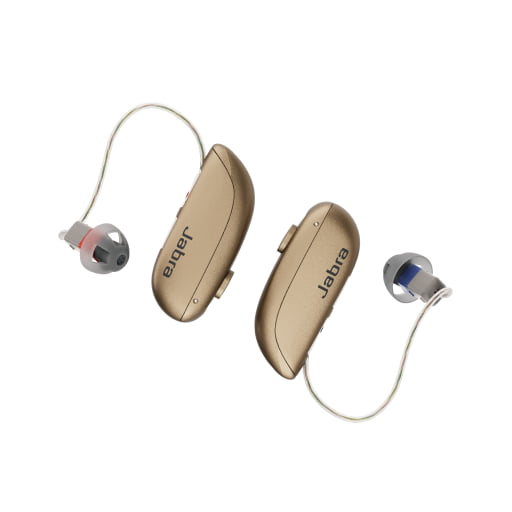
Sound Performance — What the Lab Data Shows
Both devices rank among the best OTC hearing aids in independent testing. This isn't a matchup between a budget device and a premium one — it's two genuine top performers at very different price points.
Jabra's pitch for the Select M3 is its SoundScape Auto Focus technology, which Jabra says locks onto speech and reduces noise. No lab has tested the M3, though, and the Select 700 that shared that technology scored 1.0 out of 5 for speech in noise at HearAdvisor, against 2.5 for the Beyond Pro. The Beyond Pro earned a Grade A there, the lab's top rating for OTC devices. Both should help with mild to moderate hearing loss, but only one has a lab score.
The Tinnitus Question — a Clear Winner
If you have tinnitus alongside hearing loss, this section may decide the comparison for you entirely.
The ELEHEAR Beyond Pro includes built-in tinnitus masking with 20+ sound therapy options — ocean sounds, white noise, and other masking tones — with independent volume control accessible through the app. You can layer masking sounds behind your regular hearing amplification without opening a separate app. This is a real, functional tinnitus management feature.
I couldn't find a tinnitus feature on the Jabra Enhance Select M3 page or in Jabra's model comparison. ELEHEAR builds a masking library into the Beyond Pro.
Professional Support: Audiologists vs. App
Jabra Enhance — 3 years of licensed audiologist access
Every Jabra Enhance purchase includes three years of remote video appointments with licensed audiologists through the Jabra app. These are real professionals — not customer service representatives — who can view your hearing profile, make programming adjustments in real time, and troubleshoot specific listening challenges. For first-time wearers navigating the adjustment period, this is the most valuable feature Jabra offers. Hearing aids work better when they're tuned by someone who knows what they're doing, and having that access for three years is a genuine advantage.
ELEHEAR Beyond Pro — self-managed via app
ELEHEAR's app gives you real control: volume, environment modes (General, Restaurant, TV), noise reduction adjustment, directionality, and an in-app hearing test to calibrate to your specific loss profile. For someone comfortable with technology who already knows what they need, this level of control is sufficient. For a first-time wearer navigating the adjustment period alone, it requires more patience and self-direction.
Battery Life and Trial Period
Battery: Jabra wins clearly
Jabra Enhance Select M3 is rated at about 24 hours a charge, against 20 for the Beyond Pro. Jabra still wins, but it's a narrower gap than the previous Select 700's 30 hours. What actually helps is the case: it holds three more full charges, so about 96 hours of wear and eliminates mid-day charging anxiety. The ELEHEAR Beyond Pro delivers 20 hours — a full waking day — with a 15-minute fast charge option that gives 6 hours of use. For most wearers, 20 hours is more than enough. But if you travel frequently or need maximum independence from the charger, Jabra still wins on battery, though by less than the old 700 did.
Trial period: Jabra wins here too
Jabra's 100-day trial, which applies when you buy direct, is more than twice ELEHEAR's 45-day direct window, though Yeasound offers 100 days direct too. For a $1,995 purchase, that extended evaluation period is meaningful: three months to test in restaurants, family gatherings, travel, and every other listening environment in your life. ELEHEAR's 45-day trial is competitive with the broader OTC market — Jabra's is exceptional.
| Feature | ELEHEAR Beyond Pro | Jabra Select M3 |
|---|---|---|
| Price | $599 | $1,995 |
| Speech-in-noise | ✓ Grade A | ✓ Top tier |
| Tinnitus masking | ✓ 20+ sounds | ✗ None |
| Audiologist support | ✗ App only | ✓ 3 years remote |
| Trial period | 45 days | ✓ 100 days |
| Battery life | 20 hrs | ✓ ~24 hrs |
| Fast charge | ✓ 15 min = 6 hrs | ✗ |
| Auracast | ✗ | ✓ |
| Warranty | 1 year | ✓ 3 yrs + loss/damage |
| Best for | Value + tinnitus | Support + first-time wearers |
Who Each One Is Right For
ELEHEAR Beyond Pro is the right choice if you:
- Have tinnitus alongside hearing loss — Jabra has no masking at any price point
- Want lab-verified Grade A OTC performance at $599
- Have worn hearing aids before and are comfortable managing your own settings
- Regularly need Bluetooth streaming and want a fast-charge backup option
- Budget is under $1,000
- Want the best price-to-performance ratio in the OTC category
- Are a first-time wearer who wants licensed audiologist guidance during adjustment
- Want the longer battery and a case that recharges it three more times
Jabra Enhance Select M3 is the right choice if you:
- Are a first-time hearing aid wearer who wants a licensed audiologist through the adjustment period
- Value the 100-day trial to genuinely evaluate across all listening environments
- Stream audio in public spaces and want Auracast for theaters, airports, and PA systems
- Want the longer battery and a case holding three more charges
- Want three years of warranty protection with loss and damage coverage
- Have tinnitus — Jabra offers no masking feature in the entire lineup
- Have a budget under $1,000 — ELEHEAR delivers comparable performance at $599
My Honest Verdict
This is the largest price gap of any comparison on this site — $1,396 separates these two devices. Here's my honest assessment of where that gap is and isn't justified.
For most buyers, the ELEHEAR Beyond Pro is the stronger pick. It's lab-verified with a HearAdvisor Grade A, it includes tinnitus masking that Jabra doesn't offer at any price, and it costs $1,396 less. The app gives capable, real control over your settings, and the 20-hour battery covers a full day with headroom. If you've worn hearing aids before and know what you need, there's no compelling reason to pay the premium.
The case for Jabra comes down to one core thing: professional guidance. If you're wearing hearing aids for the first time and the adjustment period genuinely worries you — if you want someone licensed to guide your settings for the next three years — that's a real differentiator, and Jabra is the only OTC device that delivers it authentically. The 100-day trial and the long battery are genuine bonuses on top of that.
If you have tinnitus, the choice is simple: ELEHEAR. If you don't, and this is your first device, think seriously about whether that audiologist access would actually change your daily experience. For many first-time wearers, it would. For everyone else — save the $1,396.
Free Guide: 5 Questions to Ask Before You Buy
Five questions to ask before you spend $1,000 or more on hearing aids, from someone who has worn them for 13 years. A few short emails follow with what the lab data says.
- The five questions, on one page you can print
- What independent lab data says about OTC aids under $600
- When OTC isn't enough, and what a professional visit costs
From a 13-year hearing aid wearer. No spam. Unsubscribe anytime.
Sources & References
Key facts and figures on this page come from these primary and independent sources. Data is current as of publication — confirm the latest details with each source.
- U.S. Food & Drug Administration. OTC Hearing Aids: What You Should Know (FDA established the OTC category in 2022 for adults 18+ with perceived mild-to-moderate hearing loss). fda.gov
- HearAdvisor. Independent OTC hearing aid lab testing (audiologist-run; standardized clinical measurement protocols). hearadvisor.com
Loss Beyond Mild to Moderate?
If OTC isn't cutting it, the fix is a hearing professional who programs the aids to your hearing test and keeps adjusting them. My own loss is past what OTC is built for, and that's how mine are set up. ZipHearing sells Phonak, Oticon, Signia, Starkey, Widex and ReSound aids and sends you to a local provider for the fitting. Its model pages say the first year of visits is included and visits after that are $65 each (checked October 6, 2026). Aids are listed from about $2,100 to $4,900 a pair, with a 45-day refund.
See ZipHearing's models and prices →