Yeasound RIC800 vs ELEHEAR Beyond Pro: Which Should You Buy?
Two Grade A OTC aids, $50 apart. The lab likes the RIC800 more. Here's what that means, and the two reasons you might still pick the Beyond Pro.
Quick Verdict
On the lab numbers the Yeasound RIC800 wins: a 4.7 SoundScore to the Beyond Pro's 4.2, for $50 less, with a 100-day trial if you buy direct. The Beyond Pro wins on fast charging, and it ties on speech in noise.
- Want the higher lab score (4.7 vs 4.2, both Grade A)
- Care most about speech in quiet rooms and streaming music
- Want the longer trial (100 days direct vs 45)
- Want the smaller, lighter aid (2.69 g vs 4.8 g)
- Want to pay $549 instead of $599
- Want fast charging (15 minutes for up to 6 hours, per ELEHEAR)
- Like the sound of ELEHEAR's online audiology service (ask what it covers)
- Want a case ELEHEAR says holds up to 4 full charges
- Are fine with a weaker own-voice score for the extras
At a Glance: Specs Side by Side
Everything below was read on October 27, 2026. Lab scores are from HearAdvisor. Water resistance, weight, battery and trial terms are the sellers' own claims.
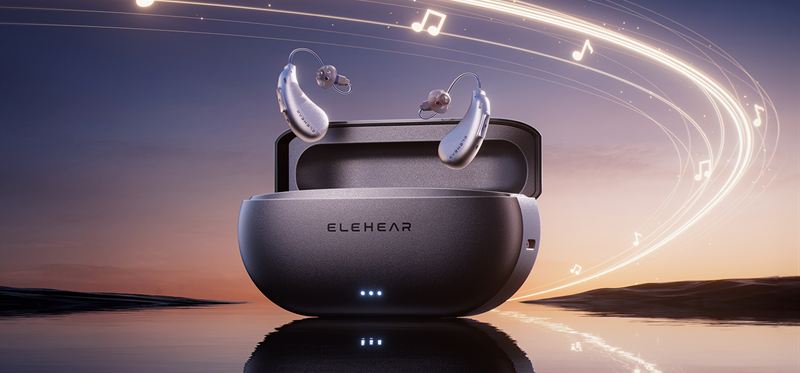
The Beyond Pro is $599 on its own and $631 with the dry box. ELEHEAR's page listed a Halloween sale code on October 27; I haven't tested it in a cart, so check the price at checkout.
What the Lab Measured
HearAdvisor puts each aid on a manikin, scores five things out of 5, and rolls them into one SoundScore. Both of these tested at a Grade A. Both were tested with the maker's default settings and a medium-power receiver, and for both the tuned fit scored exactly the same as the initial fit.
| HearAdvisor, Sept 15, 2026 | RIC800 | Beyond Pro | Gap |
|---|---|---|---|
| SoundScore | 4.7 (Grade A) | 4.2 (Grade A) | RIC800 +0.5 |
| Speech in quiet | 4.4 | 3.3 | RIC800 +1.1 |
| Speech in noise | 2.4 | 2.5 | Beyond Pro +0.1 (a tie) |
| Own voice | 2.1 | 1.2 | RIC800 +0.9 |
| Music streaming | 4.3 | 3.8 | RIC800 +0.5 |
| Feedback control | 5.0 | 5.0 | Tie |
The RIC800 wins four of the six lines, ties on feedback control, and trails by a tenth of a point in noise. The biggest gap is speech in quiet: 4.4 against 3.3. That's the everyday situation of talking to one person in a calm room, so it's the number I'd weigh most. It also beats the Beyond Pro on music streaming, 4.3 to 3.8.
Own voice is the weak spot on both. The RIC800 scored 2.1, below the OTC average. The Beyond Pro scored 1.2, and the lab lists "own voice sounds unnatural" as a drawback. That's the boomy, stuffed-up sound of your own voice. A longer trial helps here, because it's the kind of thing you only know after a few days of wearing them.
One limit applies to everything above. HearAdvisor tests one standard moderate hearing loss, so your ears can come out differently. A manikin also can't tell you how an aid fits your ear or how the app feels to use.
Price, Trial, Battery and the Fine Print
Price and trial
The RIC800 is $549 on Yeasound's site and on Amazon. The Beyond Pro is $599 on ELEHEAR's site. Buying direct gets you a 100-day return window on the RIC800 and a 45-day risk-free trial on the Beyond Pro. The RIC800's Amazon listing says free 30-day refund or replacement instead, so if trial length matters to you, buy it from Yeasound.
Battery and charging
Yeasound says the RIC800 lasts up to 23 hours in hearing mode and about 12 streaming, and Amazon's listing says the case adds three more full charges. ELEHEAR says the Beyond Pro lasts up to 20 hours and that a 15-minute charge gives up to 6 hours, with a case that holds up to 4 full charges. So the RIC800 lasts three hours longer between charges, and the Beyond Pro is the one to grab if you forget to charge. (Yeasound's own pages don't agree with each other on battery life, which I sorted out in the RIC800 review.)
Size and water resistance
The RIC800 weighs 2.69 g per aid and the Beyond Pro 4.8 g, according to the sellers. Yeasound claims IPX8 water resistance and ELEHEAR claims IP67. Those are the makers' claims, and HearAdvisor doesn't test water resistance. If you have small ears or wear glasses, the lighter aid may sit better, but you won't know until you try it.
Support and tinnitus
Yeasound's page lists phone support (it says 24/5) and a free hearing test. ELEHEAR's page says "online audiology service" and "lifetime audiologist support." I haven't checked what either one includes, so ask before you buy if it matters to you.
Yeasound lists tinnitus relief on its product page. I didn't find a tinnitus feature in the Beyond Pro's product-page specs on October 27, though ELEHEAR has described tinnitus sound therapy for its app elsewhere. HearAdvisor didn't measure either one. If tinnitus is why you're shopping, check each app's feature list first and confirm with the seller.
Who Should Pick Which
The Yeasound RIC800 is the better pick if you:
- Want the highest lab score on this site for a mild to moderate loss
- Spend most of your day in quiet rooms, on the phone or listening to music
- Want 100 days to decide (buy from Yeasound, not Amazon)
- Want the longer battery and the smaller aid
- Need a quick top-up charge during the day
The ELEHEAR Beyond Pro is the better pick if you:
- Want fast charging so a dead battery never ruins the morning
- Value ELEHEAR's online audiology service and plan to use it
- Are fine with the same noise score and a lower quiet-room score
- Are sensitive to the sound of your own voice (the lab scored it 1.2 out of 5)
- Want the longest possible trial
If your loss is past mild to moderate, neither is built for you. The OTC vs prescription breakdown explains where the line is.
My Verdict
Buy the RIC800 unless fast charging or ELEHEAR's support service is a real need for you. It scored higher in the lab, it costs $50 less, it's lighter, the battery lasts longer, and the direct trial is more than twice as long. Beyond Pro's one clear edge is how quickly it recharges.
The lab can't tell you which one your ears will like, and neither aid fixes noisy rooms. That's why the trial matters more than usual here. Use all 100 days on the RIC800, or all 45 on the Beyond Pro, and send them back if the sound of your own voice bothers you.
Frequently Asked Questions
Free Guide: 5 Questions to Ask Before You Buy
Five questions to ask before you spend $1,000 or more on hearing aids, from someone who has worn them for 13 years. A few short emails follow with what the lab data says.
- The five questions, on one page you can print
- What independent lab data says about OTC aids under $600
- When OTC isn't enough, and what a professional visit costs
From a 13-year hearing aid wearer. No spam. Unsubscribe anytime.
Sources & References
All pages below were read on October 27, 2026. Prices, trials and promotions change, so confirm them at checkout.
- HearAdvisor. Yeasound RIC800 Expert Review (SoundScore 4.7, Grade A; sub-scores; lab page dated September 15, 2026). hearadvisor.com
- HearAdvisor. Elehear Beyond Pro Expert Review (SoundScore 4.2, Grade A; sub-scores; lab page dated September 15, 2026). hearadvisor.com
- Yeasound. Yeasound RIC800 product page (price, battery, weight, water resistance, 100-day return window, warranty, support). yeasound.com
- Amazon.com. Yeasound RIC800 listing (price, 30-day refund or replacement, case charges, customer rating). amazon.com
- ELEHEAR. Beyond Pro product page (price, 45-day risk-free trial, battery, fast charge, weight, water resistance, warranty). elehear.com
Loss Beyond Mild to Moderate?
If OTC isn't cutting it, the fix is a hearing professional who programs the aids to your hearing test and keeps adjusting them. My own loss is past what OTC is built for, and that's how mine are set up. ZipHearing sells Phonak, Oticon, Signia, Starkey, Widex and ReSound aids and sends you to a local provider for the fitting. Its model pages say the first year of visits is included and visits after that are $65 each (checked October 25, 2026). Aids are listed from about $2,100 to $4,900 a pair, with a 45-day refund.
See ZipHearing's models and prices →